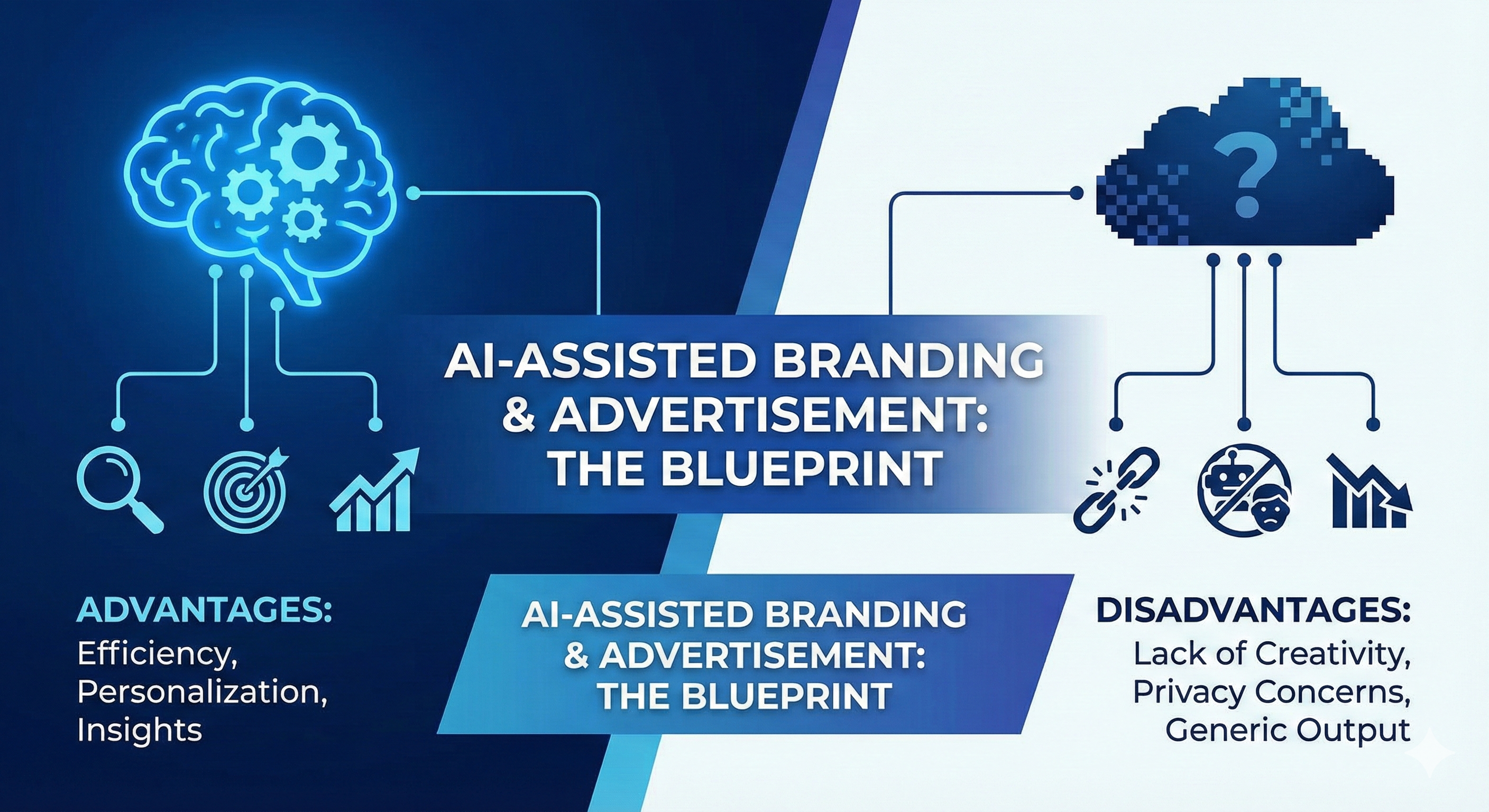
In today’s fast-paced marketplace, the FMCG industry is under constant pressure to stay visible, relevant, and competitive. With consumers scrolling faster and trends changing almost overnight, traditional branding methods alone are no longer enough. This is where AI-assisted branding and advertising step in.
Artificial Intelligence helps FMCG brands create smarter campaigns, reach the right audience, and respond quickly to market trends. However, while AI offers speed and efficiency, it also brings challenges that brands cannot afford to ignore. Let’s explore the advantages and disadvantages of AI-assisted branding and advertising in the FMCG industry in a simple and realistic way.
Advantages of AI-Assisted Branding and Advertising
1. Increased Digital Presence
AI helps FMCG brands stay active across multiple digital platforms at the same time. From social media posts to online ads and email campaigns, AI tools can automate publishing and optimize performance. This ensures that brands remain visible wherever consumers are spending their time online, which is crucial in a highly competitive FMCG market.
2. Faster Trend Riding
Consumer preferences in FMCG change very quickly. AI can analyze online searches, social media conversations, and buying behavior in real time. This allows brands to identify emerging trends early and respond faster than competitors. As a result, brands can launch relevant campaigns while the trend is still fresh.
3. More Targeted Content
One of the biggest advantages of AI in FMCG advertising is personalization. AI helps brands understand consumer behavior and deliver content that matches individual preferences. Instead of one generic message for everyone, brands can create more relevant and engaging ads, leading to higher conversion rates and better customer relationships.
4. Brand Family Making
Many FMCG companies manage multiple products under one parent brand. AI helps maintain consistency in tone, visuals, and messaging across product lines while still allowing customization. This makes it easier to build strong brand families, where consumers can easily recognize and trust related products.
5. Cost Efficiency
AI reduces marketing costs by automating repetitive tasks such as content generation, ad placement, and performance analysis. It also minimizes trial-and-error spending by predicting what type of content will perform best. For FMCG brands working with tight margins, this cost efficiency is a major benefit.
Risks Associated with AI Integration in FMCG Branding
1. Brand Dilution Risk
When too much content is created using similar AI tools, brand communication can start to look generic. If every brand sounds the same, it becomes difficult for consumers to remember or emotionally connect with a specific FMCG brand. This can weaken brand identity over time.
2. Brand Differentiation Risk
Strong FMCG brands often stand out because of creativity and emotional storytelling. AI usually relies on past data and patterns, which can limit originality. Without human creativity, brands may struggle to create unique campaigns that truly differentiate them from competitors.
3. Content Risk
AI does not always understand cultural context or emotional sensitivity. Mistakes in messaging, visuals, or tone can lead to misunderstandings or negative public reactions. In mass-market FMCG advertising, even small content errors can damage brand reputation.
4. Copyright and Bias Risk
AI systems are trained on large datasets that may include biased or copyrighted material. This creates legal and ethical risks for FMCG brands. If not monitored properly, AI-generated content may lead to copyright violations or unintentionally reinforce stereotypes.
5. Authenticity Risk
Today’s consumers value honesty and human connection. Over-automated branding can feel artificial and impersonal. If consumers believe that a brand relies too heavily on AI and lacks human values, trust and loyalty may decline.
Conclusion
AI-assisted branding and advertising offer powerful opportunities for the FMCG industry, including better digital presence, faster trend adoption, targeted messaging, and cost savings. However, these advantages come with real risks such as brand dilution, loss of differentiation, content errors, and reduced authenticity.
The most effective approach is a balanced one—using AI for efficiency and insights while keeping human creativity, judgment, and ethics at the center of brand strategy. When used responsibly, AI can strengthen FMCG branding rather than replace its human touch.